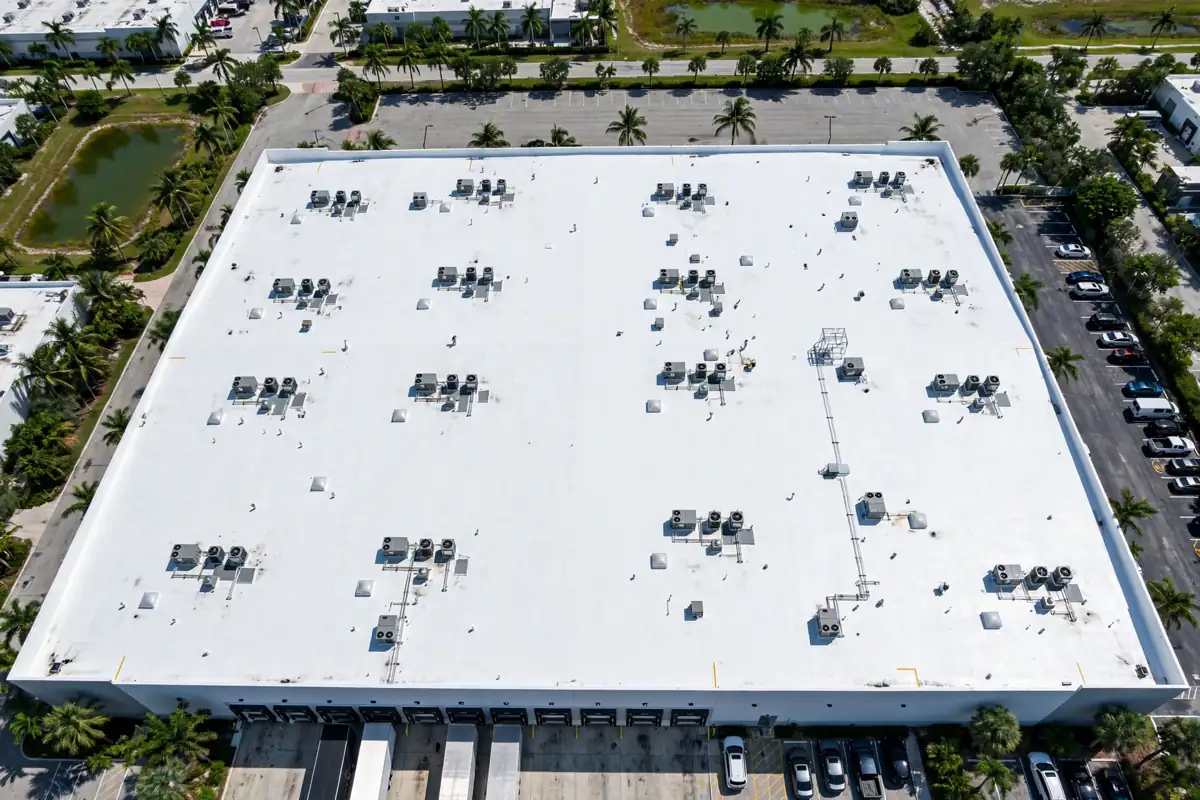
Why silicone wins on ponding flat roofs
Most low-slope roofs in Miami-Dade, Broward, and Palm Beach hold water somewhere — a low spot at a drain, a deflected bay between joists, a cricket that was never built. Acrylic coatings absorb that standing water, soften, and eventually fail in it. Silicone is moisture-cured and chemically indifferent to ponding: water sitting on it for weeks does not degrade it.
Silicone also resists UV without chalking, so the film thickness you install is the thickness still working a decade later. On a white reflective surface, roof temperatures drop sharply compared with a dark membrane, which matters in buildings that cool twelve months a year.
High-solids silicone: what the term means for you
High-solids silicone delivers more dry film per gallon because less of it evaporates during curing. In practice that means a single-pass application can reach specified thickness — commonly in the 30-plus mil range for long warranty terms — with less labor and fewer weather windows than multi-coat build-ups.
Thickness is the warranty. When you compare proposals, compare specified dry-film thickness and the manufacturer's warranty term at that thickness, not just the product name. A thin coat of a premium product is still a thin coat, and it will be priced like a shortcut because it is one.
Where silicone is the wrong answer
Silicone is slippery when wet, so walkways to rooftop equipment need granule or walk-pad treatment in traffic paths. It also holds dirt more than acrylics, which dulls reflectivity over time unless the roof is washed on a maintenance cycle — a cosmetic and energy point, not a failure, but worth knowing before you choose.
Once silicone is down, almost nothing else sticks to it — including other coating chemistries. A future recoat must be silicone. That is a reasonable trade for most owners, but it should be a conscious one, made with the recoat path priced into your long-term roof plan.
The silicone restoration process
The system starts before any silicone: pressure washing, moisture scanning, cutting out wet insulation, reinforcing every seam, lap, fastener, and penetration with silicone mastic and fabric, and treating any rust on metal decks. Details fail first on every roof, so details get the most material and the most photographs.
Application is verified as it happens with wet-mil gauge checks logged by section. At closeout you should receive the thickness log, before-and-after photos, and the registered manufacturer warranty — the paper trail that makes the roof an asset in a sale, refinance, or insurance renewal.
Silicone in the High-Velocity Hurricane Zone
Miami-Dade and Broward sit in the High-Velocity Hurricane Zone, and building officials and insurers both ask the same question: what is the product approval for this assembly? Specific silicone systems hold Miami-Dade Notices of Acceptance for recover and restoration use. Get the number, match it to your roof type, and file it.
A seamless, fully adhered membrane also removes the loose laps and exposed fasteners that wind exploits first. Coating is not a structural upgrade — if your deck or attachment is deficient, that is a different scope — but it eliminates the most common wind-driven rain entry points on an aging low-slope roof.
Signs this service is the right call
- Ponding water that remains 48 hours or more after rain anywhere on the roof
- An acrylic or aluminum coating that is softening, blistering, or wearing thin in low areas
- Leaks that trace to laps and seams rather than to punctures or equipment curbs
- A TPO, modified bitumen, or metal roof that is sound but losing its factory surface to UV
- A recoat decision on an existing silicone roof reaching the end of its first term
How the work runs, step by step
- Moisture scan and adhesion test. Wet insulation is mapped and a pull test confirms the existing surface will bond — silicone still needs a clean, sound substrate.
- Detail restoration first. Seams, laps, fasteners, and penetrations are reinforced with mastic and fabric before any field coating begins.
- Wet insulation replacement. Saturated sections are cut out and rebuilt to the existing assembly so the new membrane is not sealing in water.
- High-solids application. Silicone is applied to the specified dry-film thickness in one or two passes, with mil checks logged per section.
- Warranty and maintenance handoff. Manufacturer warranty registered, walk-path treatment installed where needed, and a wash-and-inspect schedule set.
Planning costs in South Florida
| Scope | Planning range | Notes |
|---|---|---|
| Silicone restoration system | $2.75–$4.25 / sq ft | Thickness and prep drive the range |
| Silicone recoat (existing silicone) | $1.50–$2.50 / sq ft | At end of first term, sound substrate |
| Wet insulation replacement | Priced per area found | Set by moisture scan before signing |
Ranges are planning figures from published market data, not quotes. Your number depends on the moisture scan, deck condition, detail count, and access. Get the full breakdown in the commercial roof coating cost guide.
Frequently asked questions
Why is silicone better for ponding water?
Silicone is moisture-cured and does not re-emulsify or soften in standing water, while acrylic coatings absorb ponded water and break down in it. On a Florida flat roof that holds water after every storm, that single chemical difference decides whether the low areas last the full warranty term.
How thick should a silicone roof coating be?
Long-term systems are commonly specified at 30 or more dry mils, verified with gauge checks during application. The manufacturer's warranty term is tied to thickness, so your proposal should state the target mils and your closeout should include the log proving they were reached.
Can silicone go over my existing roof?
Sound TPO, PVC, EPDM, modified bitumen, built-up, metal, foam, and existing silicone surfaces are all coated with silicone after cleaning and adhesion testing. Saturated insulation and failed deck sections are replaced first — silicone bonds to the surface, it does not rescue what is under it.
Is a silicone roof slippery and hard to maintain?
Wet silicone is slick, so service paths to HVAC equipment get walk pads or granule treatment as part of a proper scope. Maintenance is otherwise simple: keep drains clear, wash accumulated dirt every few years to restore reflectivity, and inspect after major storms.
Can you recoat a silicone roof later?
Recoating at the end of the first term is the standard plan and a major reason owners choose silicone — a sound silicone roof can take a fresh silicone system at a fraction of the original cost. The one rule: the recoat must be silicone, because other chemistries will not adhere to it.
Does silicone come with a manufacturer warranty?
Manufacturer system warranties of 10, 15, and 20 years are available when thickness, prep, and applicator requirements are met and the job is registered. Ask whether the warranty covers materials only or materials and labor, and whether ponding water is included — on silicone systems it should be.
How long does a silicone coating job take?
A typical 20,000 square foot roof runs about one to two weeks including prep, weather permitting. Prep and detail work take longer than the coating itself, and South Florida afternoon storms set the daily rhythm — a credible schedule builds that in rather than promising around it.
Related: all commercial roof coatings · roof restoration · repair & maintenance · service areas · who we serve