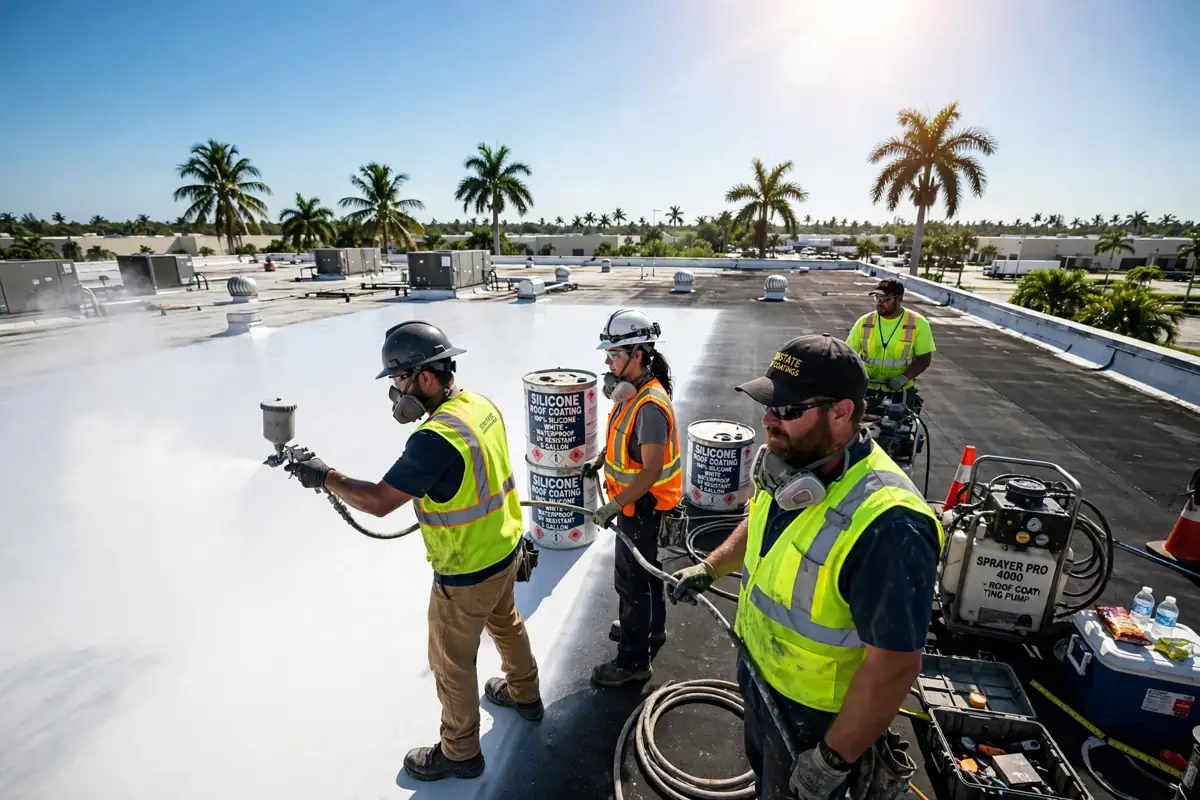
What elastomeric means, in plain terms
Elastomeric describes stretch: an acrylic elastomeric coating can expand and contract several times its cured dimension without cracking, which is exactly what a Florida roof demands. A metal or membrane roof can swing through enormous surface-temperature changes between a 95-degree afternoon and a storm-cooled evening, and a rigid coating would craze and split under that movement.
The acrylic base reflects UV instead of absorbing it, so a dark roof that once hit 170 degrees on the surface can run dramatically cooler. That protects the membrane underneath from heat aging and reduces the cooling load the building's HVAC has to carry through a ten-month cooling season.
The drainage rule: acrylic's one hard limit
Acrylic coatings need a roof that drains. Standing water is absorbed slowly into the film, softening it and breaking adhesion in ponded areas — the industry rule of thumb is that water standing 48 hours after rain disqualifies standard acrylic in that area. Slopes, tapered insulation, and functioning drains are the deciding facts, not the product brand.
Hybrid scopes are common and legitimate: an elastomeric field with silicone in the ponds and low areas combines acrylic's price with silicone's ponding tolerance. What is not legitimate is a full acrylic system sold over a known ponding roof without that conversation — ask any bidder to state, in writing, how your low areas are handled.
Best-fit roofs for elastomeric systems
Metal roofs are the classic elastomeric candidate: the system seals every fastener and lap — the two places metal roofs leak — treats rust, and ends the expansion-contraction cycle that loosens fasteners year after year. Modified bitumen and built-up roofs with positive slope also coat well and gain years of UV protection their original surface had lost.
On single-ply membranes, compatibility and adhesion testing decide. A sound, well-drained TPO or PVC roof can take an acrylic system specified for that substrate; a ponding single-ply belongs in silicone. The assessment sorts this out with test patches before a system is promised.
Energy and comfort effects you can measure
Reflective white coatings are one of the few building upgrades with a same-summer effect: lower roof surface temperature means less heat driven into the space below, which top-floor tenants and warehouse staff feel directly and which shows up in runtime hours on rooftop units. Owners of unconditioned warehouses often notice the comfort change before the utility change.
Keep expectations calibrated: savings depend on insulation levels, ceiling height, and how the space is used. A coating proposal should talk about reflectivity ratings and your building's specifics — not promise a percentage off your power bill that no one can verify in advance.
Cost position and service life
Elastomeric systems are the entry point of commercial coating for a reason: material cost is lower and multi-coat acrylic builds go down efficiently on large, simple roofs. Warranty terms of 10 to 15 years are standard at specified thickness, and a sound acrylic roof can be recoated at term — with acrylic again, or converted where drainage allows.
The false economy to avoid is a thin single-coat 'paint job' priced like a system. Specified elastomeric work includes detail reinforcement, rust treatment on metal, and multiple coats to a stated total thickness. If a bid does not state thickness, it is not describing a system at all.
Signs this service is the right call
- A metal roof leaking at fasteners and laps, with surface rust starting at seams
- A sloped or well-drained low-slope roof whose surface is chalking and aging in the sun
- Top-floor heat complaints or high cooling runtime traced to a dark roof surface
- A modified bitumen or built-up roof that is sound but past its original surfacing life
- A large, simple roof where budget per square foot decides whether restoration happens at all
How the work runs, step by step
- Drainage and ponding survey. Low areas are mapped after rain or by level survey, and the acrylic-versus-silicone call is made area by area.
- Rust and fastener preparation (metal). Loose fasteners are reset, failed ones replaced, rust is treated and primed, and laps are sealed before coating.
- Seam and detail reinforcement. Fabric-reinforced base coat at seams, transitions, and penetrations — the leak points — ahead of field coats.
- Multi-coat application. Base and finish coats applied to the specified total dry-film thickness, with coverage verified per section.
- Reflectivity and warranty closeout. Finished roof documented, manufacturer warranty registered, and a drain-and-inspect schedule handed over.
Planning costs in South Florida
| Scope | Planning range | Notes |
|---|---|---|
| Elastomeric acrylic system | $1.75–$3.00 / sq ft | Well-drained roofs; multi-coat build |
| Metal roof restoration (acrylic) | $2.00–$3.25 / sq ft | Includes fastener, seam, rust scope |
| Hybrid acrylic field + silicone ponds | $2.25–$3.50 / sq ft | For mostly-drained roofs with low spots |
Ranges are planning figures from published market data, not quotes. Your number depends on the moisture scan, deck condition, detail count, and access. Get the full breakdown in the commercial roof coating cost guide.
Frequently asked questions
How long does an elastomeric roof coating last?
Specified acrylic elastomeric systems carry 10–15 year manufacturer warranty terms in commercial service. Florida UV is the aging factor, and a maintained roof can be recoated at term. Life shortens where ponding was ignored — which is why drainage is assessed before the system is sold.
Can elastomeric coating be used on a metal roof?
Metal is one of its best uses: the system seals fasteners and laps, treats rust, and flexes with the panels' thermal movement instead of cracking at joints. Fastener reset and rust preparation are part of a proper metal scope — coating over loose fasteners and active rust is not.
What happens if my roof ponds water?
Areas still holding water 48 hours after rain should not get standard acrylic — they get silicone, tapered correction, or drain work instead. Many roofs end up hybrid: elastomeric across the field, silicone in the ponds. Your proposal should name which areas are treated which way.
Will a white elastomeric coating lower cooling costs?
A reflective white surface runs far cooler than a dark membrane, reducing heat driven into the building and rooftop unit runtime. The size of the utility effect depends on insulation and how the space is used, so treat any exact savings promise with suspicion — the temperature drop itself is measurable and immediate.
How many coats does an elastomeric system need?
Real systems are multi-coat: a reinforced base at details plus field coats to a specified total dry-film thickness, often 20-plus mils for longer terms. A single thin coat is a paint job, not a warranted system — ask every bidder for the specified total thickness in writing.
Elastomeric or silicone — which should I choose?
Drainage decides first: ponding roofs belong in silicone, draining roofs can use either. Budget decides second: acrylic costs less per square foot. Traffic, recoat plans, and substrate compatibility refine the call — an assessment that tests adhesion and maps drainage gives you the answer for your roof, not a generic one.
Can an elastomeric roof be recoated?
Yes — a sound acrylic system can be recoated with acrylic at the end of its term after cleaning and adhesion checks, extending service without a tear-off. Switching chemistries at recoat is possible in some directions (silicone over aged acrylic requires testing) but never assumed without a test patch.
Related: silicone roof coatings · commercial roof coatings overview · roof restoration · service areas · who we serve