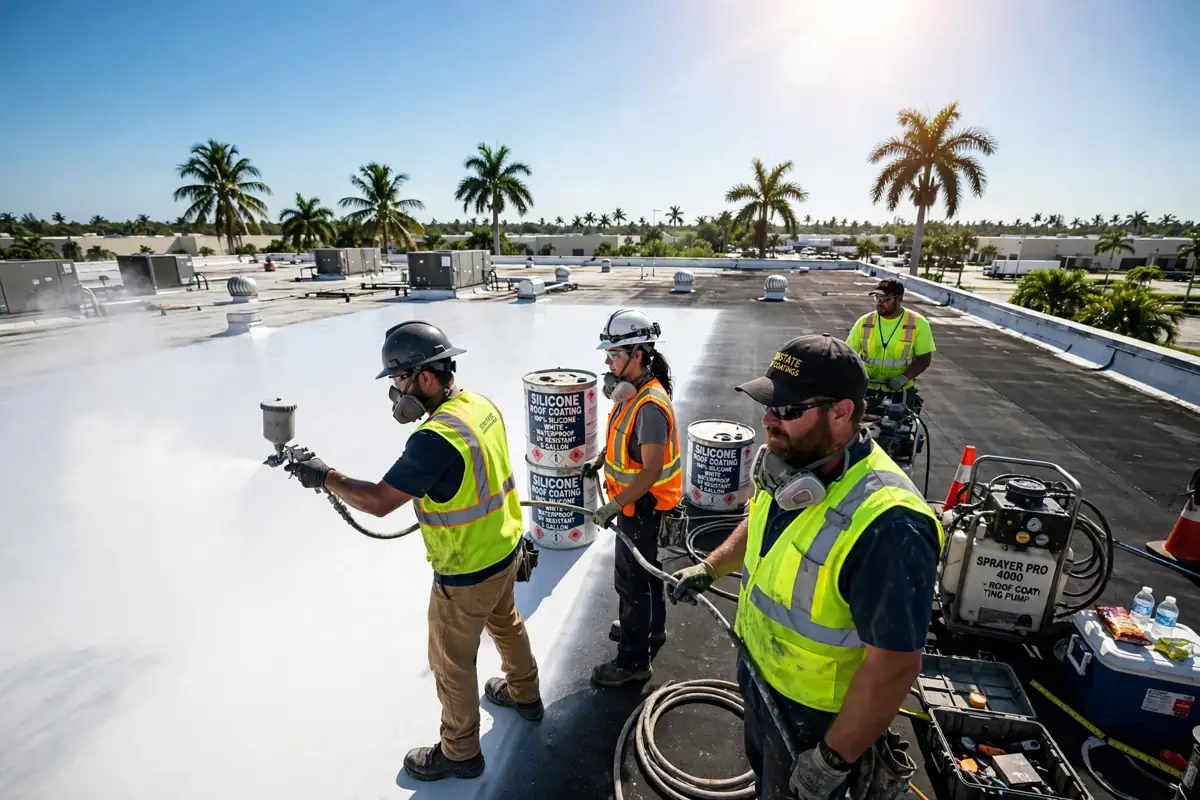
What a commercial roof coating actually does
A coating system is not paint. It is a fully adhered, seamless membrane built in place: surface preparation, seam and penetration reinforcement with fabric or mastic, a base coat, and a finish coat applied to a specified dry-film thickness. Done correctly, it eliminates the seams, fasteners, and laps where low-slope roofs actually leak.
On the right roof — structurally sound deck, dry insulation, positive drainage or a ponding-tolerant system — coating turns a roof that is aging out into a maintainable asset with a manufacturer-backed warranty term. On the wrong roof, it traps problems under a new skin. The assessment, not the product brochure, decides which roof you have.
Which roofs qualify — and which do not
Good candidates include single-ply (TPO, PVC, EPDM), modified bitumen, built-up, standing-seam and ribbed metal, and spray foam roofs with a sound substrate and limited wet insulation. A moisture scan and core cuts map exactly where insulation is wet; isolated wet areas are cut out and replaced before coating, which keeps the system honest.
Poor candidates are roofs with widespread saturated insulation, a failed or deflecting deck, or a second roof layer already hiding problems. Coating over those conditions voids warranties and guarantees blistering and delamination. When a roof is past restoration, the right recommendation is a recover or replacement — and you should hear that from the assessment, in writing, before anyone sells you a system.
Coating systems matched to South Florida conditions
South Florida punishes roofs three ways at once: extreme UV, 50-plus inches of rain a year with daily summer downpours, and hurricane-season wind. Silicone handles ponding water and UV best. High-build acrylics and elastomerics reflect heat and stretch with thermal movement but need drainage. Urethane systems take foot traffic and impact around rooftop equipment.
In Miami-Dade and Broward, the building sits in the High-Velocity Hurricane Zone, so the specific product and assembly need a Miami-Dade Notice of Acceptance or Florida Product Approval for the use proposed. Ask for the approval number for your exact system — it is a document, not a sales claim, and it should be in your proposal packet.
What the work looks like on an occupied building
Most coating projects run without shutting the building down. Crews stage in sections, pressure-wash and prep, complete repairs, and coat area by area, so tenants, patients, students, or warehouse operations keep working underneath. Odor and noise are modest compared with a tear-off, and there is no dumpster stream of old roofing going to the landfill.
The schedule risk in South Florida is weather, not labor: afternoon storms and humidity windows dictate daily start times and coat timing. A realistic proposal sequences the work around the rainy season and states cure windows honestly instead of promising a finish date the sky will not honor.
Warranties, maintenance, and what happens after
Manufacturer system warranties commonly run 10, 15, or 20 years when the system is installed to specification by an approved applicator and documented with thickness checks and photos. Read what the warranty actually covers — material only versus material and labor, and whether ponding water is excluded — because those two lines decide what you own.
A coated roof still needs a maintenance rhythm: biannual inspections, drain cleaning, and prompt repair of any mechanical damage from other trades. Budgeted as a maintenance expense and inspected on schedule, a restored roof routinely outlasts its first warranty term and can often be recoated at the end of it instead of replaced.
Signs this service is the right call
- Recurring leaks at seams, laps, or penetrations rather than across the whole field of the roof
- A roof membrane that is aging, chalking, or losing granules but still adhered and structurally sound
- Ponding areas that stay wet 48 hours after rain on an otherwise healthy roof
- A capital budget that cannot absorb a tear-off this cycle, with a roof that still qualifies for restoration
- Rising cooling costs from a dark, heat-absorbing roof surface in a building that runs AC year-round
How the work runs, step by step
- Assessment and moisture scan. Infrared or nuclear moisture survey plus core cuts identify wet insulation and confirm deck condition before any system is specified.
- Written scope and product approval. You receive the system, thickness, prep scope, and the product approval documentation for your jurisdiction — before signing.
- Preparation and repairs. Pressure washing, seam and detail reinforcement, wet-area replacement, and rust treatment on metal, all photographed as it happens.
- Application to specification. Base and finish coats applied at the specified rate, with wet-mil checks logged so the finished thickness is verified, not assumed.
- Closeout and warranty registration. Final walk, photo record, and manufacturer warranty registration, plus a simple inspection schedule to keep the warranty in force.
Planning costs in South Florida
| Scope | Planning range | Notes |
|---|---|---|
| Acrylic / elastomeric system | $1.75–$3.00 / sq ft | Needs positive drainage; strong UV reflection |
| Silicone system | $2.75–$4.25 / sq ft | Best for ponding water; high-solids systems |
| Urethane system | $3.00–$4.75 / sq ft | Traffic and impact areas, equipment zones |
| Full tear-off + replacement (comparison) | $9–$15 / sq ft | For roofs past restoration |
Ranges are planning figures from published market data, not quotes. Your number depends on the moisture scan, deck condition, detail count, and access. Get the full breakdown in the commercial roof coating cost guide.
Frequently asked questions
How long does a commercial roof coating last in Florida?
A properly installed silicone or elastomeric system carries 10–20 year manufacturer warranty terms in Florida service. Actual life depends on thickness applied, ponding conditions, and whether inspections happen on schedule — a maintained coated roof can often be recoated at term instead of torn off.
Can a coating stop active leaks?
Leaks at seams, fasteners, and penetrations are exactly what a restoration scope repairs before coating, using reinforcement fabric and mastic at every detail. A coating is not a patch over a saturated roof, though — wet insulation found on the scan is removed first, or the leak problem is sealed in, not solved.
Does my building have to close during the work?
Occupied buildings are the normal case for coating work: warehouses, hospitals, schools, retail, and offices routinely stay open. Crews work in sections with low-odor products, and the noisy tear-off phase of a replacement simply does not exist on a coating project.
What roof types can be coated in South Florida?
TPO, PVC, EPDM, modified bitumen, built-up, metal, and spray foam roofs are all coated routinely when the substrate is sound. Compatibility matters — silicone over some surfaces, acrylic over others — which is why the assessment includes adhesion testing before a system is specified.
Do roof coatings meet Miami-Dade hurricane code?
Specific coating products and assemblies carry Miami-Dade Notices of Acceptance or Florida Product Approvals for use in the High-Velocity Hurricane Zone. Ask for the approval number covering your exact system and roof type, and keep it with your building records for insurers and future buyers.
How much does a commercial roof coating cost per square foot?
Planning ranges in South Florida run about $1.75–$3.00 per square foot for acrylic systems and $2.75–$4.25 for silicone, installed, before unusual prep. Full replacement commonly plans at $9–$15 per square foot, which is why restoration wins when the roof qualifies.
Is a roof coating a repair or a capital expense?
Restoration coatings are commonly treated as maintenance by building owners for tax purposes, which can make them deductible in the year installed rather than depreciated — but treatment depends on your facts. Confirm with your CPA; your contractor should give you documentation either way.
Related: silicone roof coatings · full roof restoration · elastomeric roof coatings · service areas · who we serve